
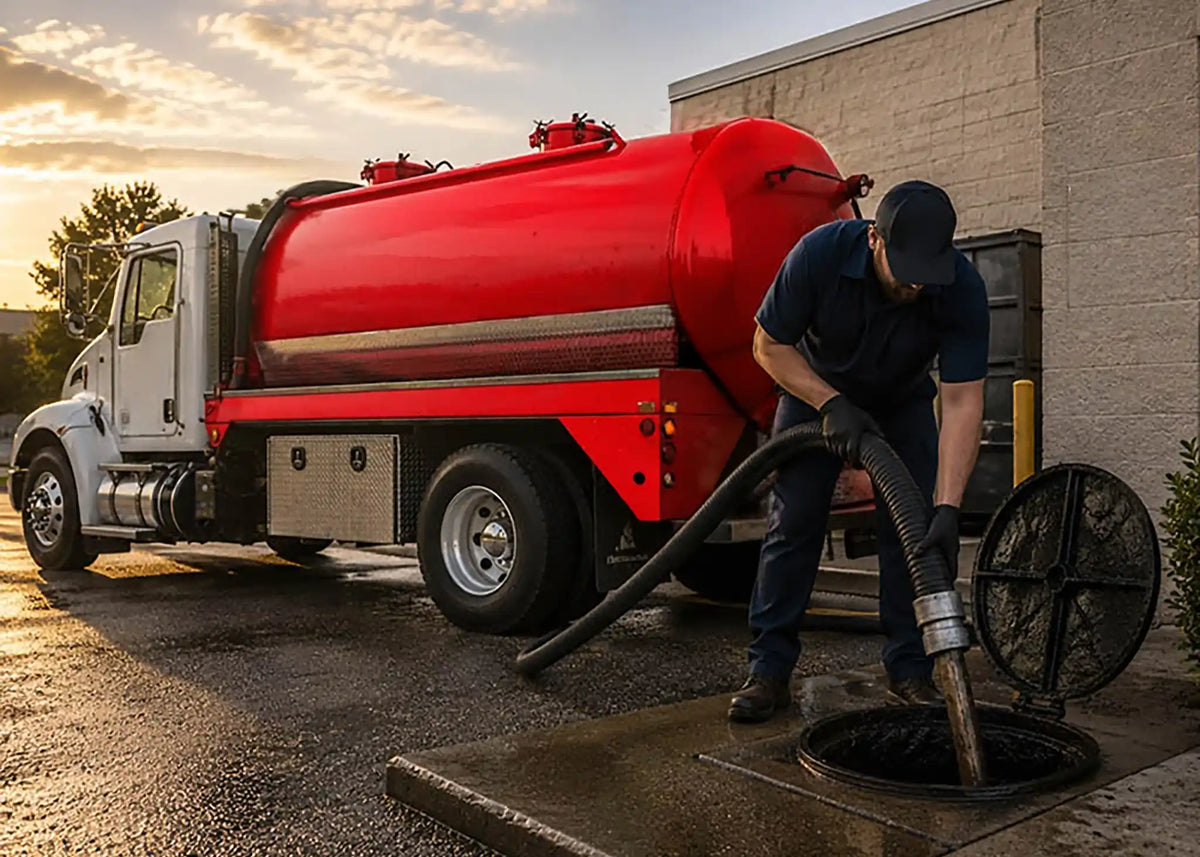
If you operate a grease trap pumping business, restaurant service company, or waste hauling operation, you have probably heard the terms grease trap truck, grease pump truck, and grease tank truck. While the names vary, they all describe a specialized vacuum truck designed to collect, transport, and unload fats, oils, and grease (FOG) from commercial grease traps and grease interceptors.
A grease trap truck is more than a standard vacuum truck with a tank. It is purpose-built around the unique characteristics of grease, including its thickness, temperature, and tendency to solidify. The right combination of tank capacity, vacuum pump, hoses, valves, and discharge equipment can make a major difference in productivity and reliability.
What Is a Grease Trap Truck?
A grease trap truck is a specialized vacuum truck used to pump and transport grease trap and grease interceptor waste from commercial kitchens and food service facilities.
Restaurants, cafeterias, hotels, hospitals, food processing facilities, and other commercial kitchens generate fats, oils, and grease during normal operations. Grease traps and interceptors capture this material before it enters the sewer system. When those tanks need to be serviced, a grease trap truck uses a vacuum system to remove the accumulated FOG and transport it to an approved disposal, treatment, or rendering facility.
The term grease trap truck is often used interchangeably with grease tank truck, grease pump truck, FOG truck, and grease collection truck.
How Does a Grease Trap Truck Work?
The basic operation is straightforward, but the equipment needs to be properly matched to the application.
First, the truck arrives at the customer's location and positions itself where the operator can reach the grease trap with the vacuum hose. The hose is connected to the trap or interceptor access point.
The vacuum pump then creates suction, pulling the thick grease, wastewater, and solids from the trap into the truck's storage tank. After pumping, the operator may inspect or clean the trap before securing the hose and moving to the next service location.
Once the truck's tank is full, the collected material is transported to an approved disposal, processing, or rendering facility.
This process is why route efficiency matters when building a grease trap pumping truck. Faster hose deployment, adequate and reliable vacuum performance, practical tank capacity relative to the route, and an efficient discharge system can all reduce downtime between jobs.
What Are the Main Components of a Grease Trap Truck?
A properly configured grease trap truck typically includes several key components:
1. Grease Storage Tank
The tank holds the material removed from grease traps and interceptors. Tank capacity should be selected based on the operator's typical route, disposal locations, chassis payload, and number of daily service calls. The tanks are typically aluminum or steel and typically lined or treated to protect against the corrosiveness of FOG waste.
2. Vacuum Pump
The vacuum pump is the heart of the system. Grease can be considerably more viscous than ordinary wastewater, so pump selection should account for the type of material being collected and the operating conditions of the route.
3. Vacuum Hose and Reel
A long, durable hose allows operators to service traps without repositioning the truck unnecessarily. A properly positioned hose reel can also make setup and cleanup faster from stop to stop.
4. Valves and Discharge Equipment
The truck needs a controlled method for unloading collected grease. Discharge configuration should be designed around the operator's disposal facility and workflow.
5. Safety and Pressure-Control Equipment
Pressure relief and related safety components protect the vacuum system and tank during operation. The exact equipment will depend on the specific truck design and specs.
Grease Trap Truck vs. Standard Vacuum Truck
So, what makes a grease trap truck different from a typical vacuum truck?
The biggest difference is application-specific design.
A conventional vacuum truck may be configured primarily for septic waste, wastewater, industrial liquids, or handling other materials. Grease collection presents different challenges because FOG can be thick and more difficult to move, particularly when temperatures drop or material has accumulated in a trap.
A grease-specific build can be configured with a pump, hose system, tank, valves, and discharge arrangement appropriate for FOG collection.
That does not mean every grease truck has the same specifications. The ideal build depends on the operator's route, typical trap sizes, disposal requirements, desired capacity, chassis, and budget.
What Is a Grease Trap Truck Used For?
The most common application is commercial grease trap pumping.
A grease trap truck can be used for:
- Restaurant grease trap pumping
- Grease interceptor cleaning
- Commercial kitchen waste removal
- Hotel and institutional kitchen servicing
- Food processing facility service
- Emergency grease removal
- FOG collection and transportation
- Certain grease recovery or rendering operations
Because commercial kitchens routinely generate FOG, grease trap pumping can be a recurring service business. The EPA offers FOG guidelines under Clean Water Act, but there are no Federal standards in the US, instead state, and local requirements determine how frequently individual traps must be serviced and how collected waste must be handled.
How Do You Choose the Right Grease Trap Truck?
Choosing a grease trap truck starts with understanding your operation rather than simply selecting the largest tank or pump available.
Grease Pump Truck Configuration Variables
Tank capacity: How much material do you typically collect before reaching your disposal facility?
Chassis and payload: Does the chassis provide sufficient payload capacity for the completed truck build and your intended operating weight?
Vacuum pump system: Is the pump properly matched to the type and volume of grease you routinely collect?
Hose configuration: Can your operators easily reach traps at restaurants and commercial facilities?
Discharge setup: Is the truck’s unload setup efficient for your intended disposal or processing location?
Route requirements: Will you primarily operate in dense urban areas with frequent disposal access, or on longer routes where additional tank capacity may be valuable?
At Arkson Truck Co., custom truck builds can be configured around the tank, hydraulics, pump package, chassis, and unloading requirements of the operation.
Why a Purpose-Built Grease Truck Matters
A grease trap pumping business depends on equipment that can perform consistently throughout demanding routine service routes. The truck is a primary production tool for your business, and as such its reliability and effectiveness is mission-critical to your daily operations.
A well-designed grease trap truck should make it easier for operators to connect, pump, transport, and unload material efficiently. The right configuration can also help ensure that the chassis, tank, pump, and other components work together as a complete system.
For companies starting a grease collection business or expanding an existing fleet, building the truck around the actual route and service requirements is an important part of the purchasing process.
Frequently Asked Questions About Grease Trap Trucks
What is a grease trap truck?
A grease trap truck is a specialized vacuum truck designed to pump, transport, and unload fats, oils, and grease from commercial grease traps and interceptors.
Is a grease trap truck the same as a grease vacuum truck?
In most industry conversations, the terms are used to describe the same basic type of equipment: a vacuum truck configured specifically for grease pumping and FOG collection.
Can a septic vacuum truck pump grease traps?
Some vacuum equipment may be capable of pumping grease, but a purpose-built grease truck is designed around the unique characteristics of FOG. Pump selection, hose configuration, tank design, and discharge requirements should be considered before using a truck for grease collection.
What size grease trap truck do I need?
The right size depends on your route volume, trap sizes, disposal locations, chassis payload, and operating requirements. More capacity is not automatically better if it creates unnecessary weight or reduces the operator’s route efficiency.
What should I look for when buying a grease trap truck?
Focus on the complete system: chassis, tank capacity and construction, vacuum pump, hose and reel, valves, discharge configuration, payload, and serviceability. The best configuration is the one matched to the work your business actually performs.
Build a Grease Trap Truck Around Your Business
A grease trap truck is a specialized piece of vocational equipment built to handle one of the most demanding types of liquid waste: fats, oils, and grease.
Whether you’re starting a new grease trap pumping route or adding another grease truck to an established fleet, the right equipment configuration can help your operators spend less time fighting the truck and more time completing service calls.
At Arkson Truck Co., we build custom vocational trucks around the needs of our customers’ operations. From chassis and tank configuration to pump systems and unloading requirements, the goal is to create a truck that fits the work — not force your business to adapt to a one-size-fits-all build. Reach out today to discuss your grease truck needs, or browse our current line of fully-configurable grease trap trucks for sale.
Share:
Vacuum Truck Maintenance Guide
Stephenson Specialty Trucks is Now Arkson Truck Co : A New Chapter in Vocational Truck Building