
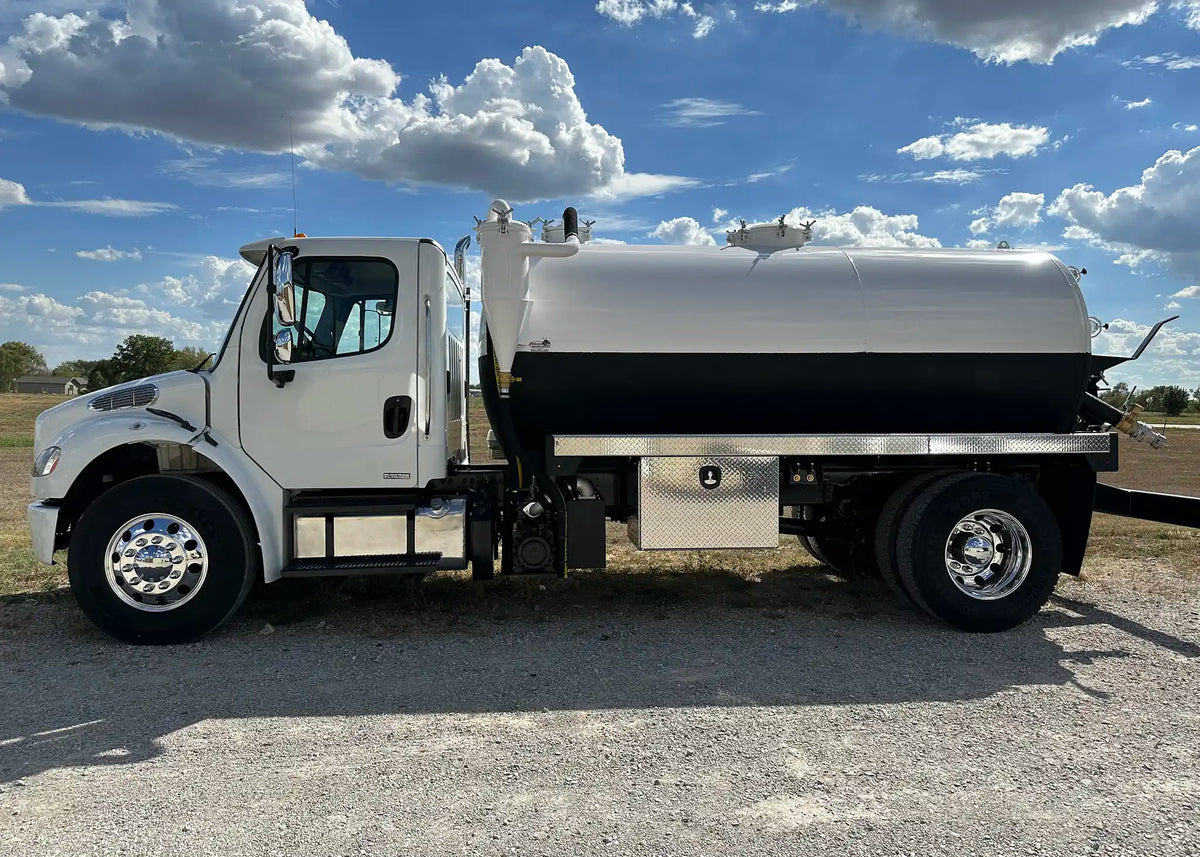
A consistent vacuum truck maintenance program can help protect your equipment, reduce unexpected downtime, and extend the productive life of your truck. Daily inspections and regularly scheduled service are especially important for vacuum trucks working in demanding environments where water, debris, dust, and other contaminants can quickly affect equipment performance.
Use the following vacuum truck maintenance checklist as a practical guide, while always following the service requirements provided by your vacuum equipment, chassis, blower, pump, and component manufacturers. When specifications differ, the applicable manufacturer's instructions should take priority.
Make Safety a Part of Every Maintenance Routine
Propper Vacuum truck maintenance should never be separated from safety.
Before performing maintenance or inspection, follow the applicable lockout/tagout, pressure-isolation, confined-space, chemical-exposure, and other safety procedures for the equipment and work environment.

Depending on the job, appropriate PPE may include:
- Protective gloves
- Eye protection
- Face protection
- Protective clothing
- Respiratory protection where required
- Hearing protection
- Other task-specific PPE
Emergency equipment should also be readily available as appropriate to the materials and working environment.
This may include:
- Spill-response supplies
- Fire extinguishers
- First-aid equipment
- Emergency comms equipment
The specific requirements should be determined by your operation's hazards and applicable regulatory requirements.
Daily Vacuum Truck Service
Three important maintenance tasks should be addressed every day: proper shutdown, draining applicable water systems, and checking the truck before extended storage.
Properly Shut Down the Vacuum Truck
Following the propper after-shift shutdown procedure for your vacuum truck is more involved than simply shutting off the engine. Proper shutdown helps ensure the longterm perfomance of your truck and prepare the truck for its next operating cycle. A daily visual inspection, lubrication, and fluid level check should be performed as part of the daily shutdown routine.
Open Applicable Drain Valves
Emptying the water system by opening all water system drain-valves and open the debris body to allow air circulation. As well as the oil catch muffler drain if applicable.
Prep for Freeze Conditions or Long-Term Storage
Anytime the truck is going to be stored during temperatures below freezing, it's critical that the water system and debris body are free of water.
If the truck is being stored longer than overnight, the rear door should be propped open with the rear-door support and the debris body partially raised and blocked.
Weekly Vacuum Truck Maintenance
Weekly maintenance focuses on fluid levels, air breathers, and debris-body cleaning. These simple checks can help identify leaks, contamination, and other problems before they become expensive repairs.
Check Fluid Levels
Position cylinders in the retracted position before checking fluid levels.
Check the hydraulic tank and blower oil, and add the correct fluid if levels are low.
If a fluid level repeatedly drops, don't simply continue topping it off. A recurring or sudden loss of fluid may indicate a leak that needs to be located and repaired.
Inspect the Air Breather
Inspect the air breather regularly and keep it clean and properly maintained.
A contaminated or restricted breather can contribute to problems within the system, so include it in routine inspections.
Clean the Debris Body
Clean the debris body regularly to remove accumulated material and make it easier to identify corrosion, damage, or other developing problems.
With the debris body raised, use a water handgun and systematically from the upper front working downward toward the rear of the body.
If equipped, clean the sludge pump and make sure the debris-body float ball is free of waste.
After cleaning, run the truck to clear moisture from the body.
Monthly Vacuum Truck Maintenance
Monthly inspections should cover the vacuum system, electrical system, body hoist, intake hose, and hydraulic system.
Inspect the Air and Water Separator Cyclone
Inspect and clean the cyclone screens for excessive debris or liquid, and check the air-access areas (e.g., intake hoses, nozzles, and deflectors) for wear.
Clean debris from the boom enclosure and apply a light coating of grease to the appropriate inside edges.
Check connections between intake couplers, ball joints, and other vacuum-system components.
Loose connections can allow air leaks and reduce blower efficiency.
Inspect the Electrical System
Inspect electrical wiring for:
- Loose connections
- Frayed wires
- Damaged insulation
- Corrosion
- Other visible damage
Finding an electrical problem during a routine inspection is much better than discovering it in the middle of a job.
Maintain the Body Hoist
Inspect the body hoist and related components, including:
- Upper and lower cylinder mounting points
- Trunnion ends
- Lifting mechanisms
- Frame
- Valves
- Cross shafts
- Pump
- Hydraulic hoses and fittings
- Cylinder packing
- Pins
- Mounting bolts
Look for damaged hoses, loose hose ends, worn pins, loose hardware, and other signs of wear.
Address excessive wear or damage before it becomes a larger mechanical or safety issue.
Inspect the Intake Hose
Vacuum truck intake hoses experience significant wear because they are typically constructed from rubber and fabric and are exposed to abrasion, bending, flexing, and the material being collected.
Inspect hoses regularly for:
- Cracks
- Punctures
- Abrasion
- Leaks
- Other visible damage
Where appropriate, periodically rotate the hose to distribute wear and help extend its service life.
Repair minor damage or replace a damaged hose as soon as possible. A small leak can reduce vacuum performance and may eventually lead to a more serious failure.
Service the Hydraulic System
Hydraulic-system contamination is one of the most common causes of hydraulic problems.
Dirt, water, metal particles, and other foreign matter can contribute to pump and valve wear, malfunctions, and sludge accumulation.
Keep hydraulic fluid clean during every service procedure. Use clean containers and equipment, and prevent dirt from entering the reservoir or hydraulic components.
If you suspect contamination, investigate the source rather than simply replacing the fluid.
Hydraulic Fluid Testing
Periodic hydraulic fluid analysis can help identify developing problems.
Laboratory testing may evaluate:
- Particle contamination
- Water content
- Viscosity
- Wear metals
- Oxidation
- Additive condition
Take samples using a consistent procedure and sampling location so results can be compared over time.
A simple visual inspection can also reveal obvious contamination. Allow the sample to settle, then hold it up to the light. Visible debris may indicate a serious contamination or component-wear problem. Cloudy or milky fluid may indicate water contamination.
Potential sources include component wear, unsealed reservoir openings, contaminated breathers, poor fluid storage, and condensation.
If contamination is found, identify and correct the source — not just the fluid itself.
For more info on maintaining your truck's hydraulic system, check out our Vocational Truck Hydraulic Fluid Servicing Tips.
Yearly Vacuum Truck Maintenance
Some maintenance tasks are performed annually or at manufacturer-specified operating-hour intervals. These tasks are just as important as daily, weekly, and monthly inspections.
Replace Hydraulic Filters
Replace hydraulic filters according to the manufacturer's recommended service interval and/or operating conditions.
Use the correct replacement filter and follow the manufacturer's installation procedure.
If filters are becoming restricted or heavily contaminated sooner than expected, investigate the cause. Rapid filter loading can indicate excessive contamination or component wear.
Service or Flush the Hydraulic System
Hydraulic-fluid replacement should be performed according to the equipment manufacturer's recommendations.
When servicing the system, drain the old fluid as specified, refill with the correct hydraulic fluid, and operate the hydraulic functions according to the manufacturer's procedure.
Return the cylinders to the specified position (typically retracted), shut down the truck, and recheck fluid levels. Add fluid as necessary to reach the recommended level.
A complete hydraulic-system flush may be appropriate after certain component failures or severe contamination. Simply draining and refilling the reservoir may not remove contamination from the entire hydraulic circuit.
Use this service as an opportunity to inspect or replace the hydraulic tank breather.
At-A-Glance Vacuum Truck Maintenance Schedule

Preparing Your Vacuum Truck for Seasonal Storage
If your vacuum truck will be inactive for several months in the off-season, take additional steps before putting it into storage.
Proper winterization can help protect the debris body, air chamber, blower, water system, and other components from moisture, corrosion, and freezing temperatures.
Steam Clean the Inside of the Debris Body
Thoroughly clean the inside of the debris body before extended storage.
Removing accumulated material helps reduce corrosion potential and prevents waste or debris from remaining inside the body during the off-season.
Protect Against Corrosion
After cleaning and drying the debris body, inspect painted surfaces for damage or corrosion.
Repair damaged areas and apply an appropriate primer or protective coating where needed.
Pay particular attention to areas exposed to moisture and corrosive materials.
Protect the Blower During Storage
If recommended by the equipment manufacturer, periodically rotate the blower by hand during extended storage.
Follow the manufacturer's storage procedure for your specific blower and vacuum system.
Check the Truck Before Returning to Service
Before putting the truck back to work after winter storage, inspect all the equipment thoroughly.
Check:
- Fluid levels
- Hydraulic hoses
- Intake hoses
- Electrical connections
- Valves and fittings
- Debris body
- Water system
- Blower
- Filters
- Lubrication points
Correct any issues before returning the truck to normal operation.
Properly Train Every Vacuum Truck Operator
Even the best-maintained vacuum truck can be damaged by improper operation.
Operator training should cover:
- Normal operating procedures
- Startup and shutdown
- Vacuum and pressure controls
- Gauge interpretation
- Material compatibility
- Tank capacity
- Emergency procedures
- Hose and connection inspection
- Spill response
- PPE requirements
- Safe driving practices
- Manufacturer-specific operating limits
Refresher training is also valuable whenever equipment, procedures, materials, or personnel change.
An operator who recognizes an abnormal sound, gauge reading, vibration, or smell can potentially head off a problem before it becomes a major failure.
How Long Does a Vacuum Truck Last?
There isn't a fixed lifespan for every vacuum pump truck on the market.
Service life can vary widely depending on factors like:
- Quality of the original build
- Chassis selection
- Vacuum pump design
- Materials handled
- Operating frequency
- Preventive maintenance
- Cleaning practices
- Corrosion exposure
- Operator practices & handling
- Load conditions
- Operating environment
- Availability of replacement parts
- Quality of repairs and rebuilds performed
A well-designed truck that receives consistent preventive maintenance will generally provide more productive service than equipment that’s routinely neglected, operated outside its intended conditions, or maintained only after failures occur.
When Should You Replace a Vacuum Truck?
While proper maintenance can extend your equipment’s service life, every truck eventually reaches a point where replacement (or professional refurbishment) becomes more economical than continued repair.
Signs that it may be time to evaluate replacement include:
- Increasing repair frequency
- Recurring pump failures
- Significant corrosion
- Structural concerns
- Difficult-to-source replacement parts
- Excessive downtime
- Outdated equipment
- Poor fuel or operating efficiency
- Insufficient capacity for current business needs
- Increasing maintenance costs
- Safety concerns
If your fleet is spending more time in the shop than in the field, it may be time to compare the cost of continued repairs with the cost and productivity benefits of a newer vacuum truck build.
The Bottom Line on Vacuum Truck Maintenance
A quality vacuum truck is a significant investment. Regular vacuum truck maintenance helps protect that investment by reducing avoidable downtime, identifying problems early, and extending the productive life of critical components.
Daily inspections, weekly cleaning and fluid checks, monthly component inspections, and scheduled hydraulic service all play an important role.
And maintenance starts with the equipment itself.
If you're purchasing a new vacuum truck, choosing the right configuration for your application can have a significant impact on long-term performance and serviceability.
Arkson Truck Co. builds custom vacuum trucks around the demands of your operation. From chassis and tank configuration to vacuum equipment, hydraulics, hoses, and other vocational equipment, Arkson can help you build a truck suited to the work you do.
Ready for a vacuum truck built around your application? Contact Arkson Truck Co to discuss your custom vacuum truck needs.
Share:
Hydraulic Fluid Servicing Tips: How to Keep Vocational Truck Hydraulics Clean, Cool & Reliable