
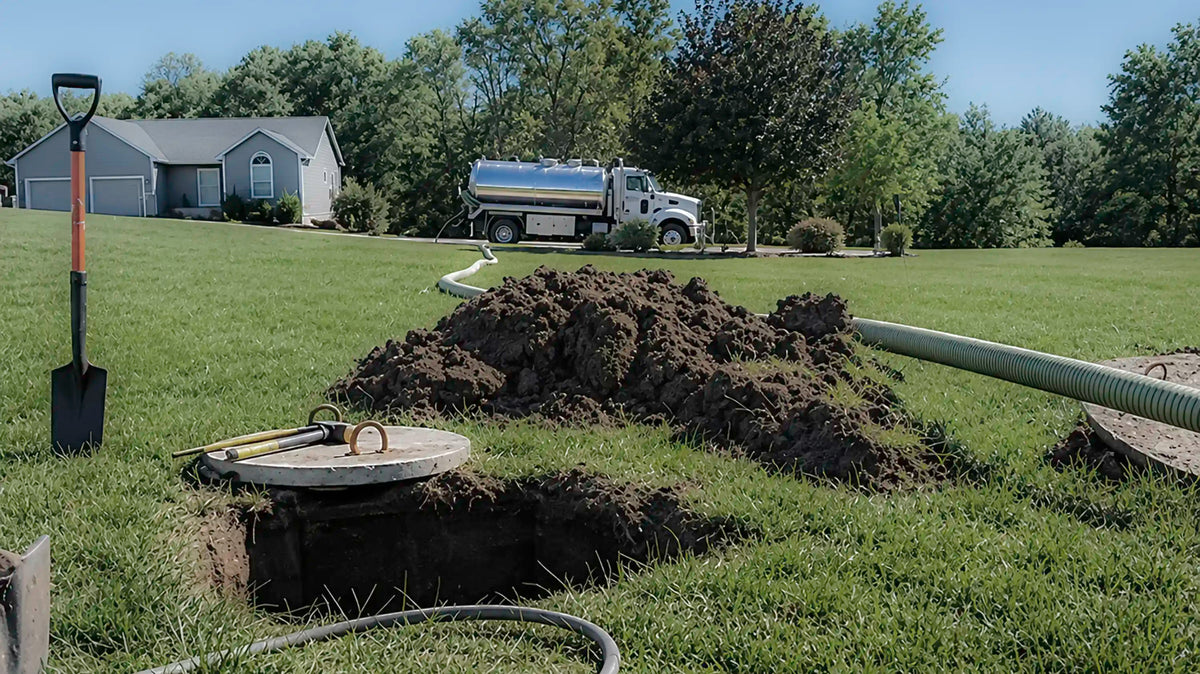
Starting a septic pumping business (or really any vacuum truck service business) can be a very profitable venture for entrepreneurs, experienced vac truck operators, or existing septic industry professionals looking to build their own company. With millions of American households relying on septic systems, recurring maintenance needs, and ongoing demand for professional wastewater services, septic pumping is an industry with long-term demand and business potential.
But how do you actually start a septic pumping business? How much does it cost? What licenses and permits do you need? And what kind of septic vacuum truck should you buy?
The answers involve more than purchasing your first septic truck and lining up customers. A successful septic business requires you to choosing the right equipment, approved wastewater disposal facilities, proper licensing, commercial insurance, competitive (but sufficient) pricing, and building efficient service routes.
Whether you're an experienced septic technician ready to become an owner-operator, purchasing an existing septic pumping route, or entering the wastewater industry for the first time, this guide explains how to start and grow a septic pumping business in 2026.
We'll cover:
-
Septic pumping business startup costs and profitability
-
State and local septic pumping licenses and permits
-
Choosing between new and used septic vacuum trucks
-
Septage disposal facilities and regulatory requirements
-
How to price septic pumping services
-
Commercial auto, general liability, and pollution insurance
-
Septic business software and customer management
-
How to find your first 50 septic pumping customers
-
When to hire your first driver and expand your fleet
-
Common mistakes that can hurt a new septic business
Is Starting a Septic Pumping Business Profitable in 2026?
Yes, a septic pumping business can be a very profitable business, particularly in rural and suburban markets where residential and commercial properties depend on onsite wastewater treatment systems.
Unlike businesses that rely on one-time purchases, septic pumping companies benefit from recurring maintenance. Most residential septic tanks should be inspected every one to three years and are typically pumped every three to five years, depending on tank size, household occupancy, water usage, and accumulated solids.
According to the U.S. Environmental Protection Agency, approximately one-quarter of U.S. homes use septic systems. That creates a substantial customer base for businesses providing septic pumping, inspection, maintenance, and related wastewater services.
Understanding the Septic Service Market
Several factors make septic pumping an attractive service business:
-
Recurring demand: Residential septic systems require periodic inspection and pumping.
-
Essential services: Wastewater management isn't a discretionary service. When a septic system needs attention, property owners need a qualified professional.
-
Local competition: Many septic businesses operate within relatively small geographic service areas, creating opportunities for operators who provide reliable service and build strong local reputations.
-
Multiple revenue streams: Established companies can expand into commercial septic services, grease trap pumping, holding tank pumping, portable sanitation, and other wastewater-related services where properly licensed.
-
Route-based revenue: A well-organized service area allows operators to complete more jobs while reducing fuel, labor, and disposal costs.
The EPA's maintenance guidlines also reinforce the recurring nature of the industry. Routine septic maintenance is necessary to prevent system failures, protect property, and reduce environmental contamination. All this contributes to septic pumping being a lucrative, generally high-demand, recession-insulated, and relatively low-competition business.
How much can a septic pumping business make?
Revenue depends on your location, average service price, tank capacity, disposal fees, number of jobs completed, and operating expenses.
For planning purposes, residential septic pumping prices can range from approximately $290 to $650 or more, depending on the market and job requirements. With the average falling around $425 according to Angi’s 2026 data. Larger tanks, difficult access, additional services, and emergency appointments can increase the final price. (We’ll deep-dive more about pricing further in the article)
Consider a hypothetical one-truck operation:
|
Business metric |
Example |
|
Average service ticket |
$425 |
|
Jobs per day |
3 |
|
Operating days per month |
20 |
|
Monthly gross revenue |
$25,500 |
|
Annual gross revenue |
$306,000 |
These figures illustrate potential revenue, not guaranteed income or profit. Fuel, disposal charges, labor, insurance, equipment payments, maintenance, taxes, and overhead must all be deducted.
You can use the estimator below to game-out various pricing, job volume, and expense scenarios to get a better idea of your specific revenue needs/goals:
Septic Pumping Business Profitability Calculator
Considering purchasing a septic truck? Estimate your financing, operating expenses, break-even workload, and potential profitability before making your investment.
Your truck investment
Enter the anticipated purchase and financing details.
Payment estimate assumes a standard fixed-rate amortizing loan. Actual financing may vary based on lender fees, taxes, credit, equipment age, and loan structure.
Monthly fixed operating expenses
Costs you generally pay regardless of how many jobs you complete.
Variable costs per job
Costs that increase as you perform additional jobs.
Revenue and operating capacity
Estimate your workload and the revenue your truck can generate.
Break-even & profitability analysis
Based on the information you entered above.
Initial investment analysis
Simplified investment estimates based on projected annual cash flow divided by the initial down payment. They do not account for taxes, resale value, additional startup costs, or changes in future cash flow.
Calculation methodology: Contribution per job = average job revenue minus variable job costs. Break-even jobs = monthly fixed costs divided by contribution per job, rounded up to the next whole job. Monthly operating cash flow = (contribution per job × planned jobs) minus monthly fixed costs.
The biggest factor influencing septic pumping profitability is route density.
A truck completing three jobs within a compact service area can be significantly more profitable than a truck completing three jobs spread across a large geographic territory.
The goal isn't simply to charge more per pump-out; it's to complete more profitable jobs with less unproductive driving.
How Much Does It Cost to Start a Septic Pumping Business?
The largest startup expense for most septic pumping businesses is purchasing a septic vacuum truck.
However, your total startup investment also needs to account for licensing, insurance, equipment, disposal arrangements, marketing, software, and enough working capital to operate while your customer base grows.
Estimated Septic Business Startup Costs
The following ranges are general planning estimates for 2026. Actual costs can vary significantly by truck configuration, condition, service region, financing terms, and regulatory requirements.
|
Startup expense |
Estimated cost |
|
Used septic vacuum truck |
40,000–120,000+ |
|
New septic vacuum truck |
140,000–300,000+ |
|
Licensing and permits |
500-3,000 |
|
Initial insurance premiums |
7,000-21,000 |
|
Hose, fittings, tools, and safety equipment |
2,000-6,000 |
|
Business registration and professional services |
500-2,500 |
|
Software and technology |
300-1,500 |
|
Initial marketing |
1000-4000+ |
|
Working capital |
Based on operating expenses (10,000-25,000+) |
A new operator purchasing a used septic truck should generally plan for a lower-six-figure ($150-250k) total startup budget once equipment, insurance, setup costs, and operating reserves are included.
Purchasing a new, fully equipped septic vacuum truck can increase the required investment considerably.
Important: Don't spend your entire startup budget on the truck. Keeping enough cash available for repairs, fuel, insurance, payroll, and unexpected expenses is essential.
Step 1: Research Licensing and Legal Requirements for a Septic Pumping Business
Before purchasing a septic truck or advertising your services, understand the licensing and regulatory requirements in your state and county.
Septic pumping is a regulated wastewater service. Requirements vary considerably depending on where you operate, what types of waste you transport, and how that waste is ultimately disposed of.
State Septic Pumper and Hauler Licenses
Regulations for septic servicing vary widely state-to-state; many states require septic pumping contractors to obtain a specific pumper, septage hauler, or wastewater transporter license.
Depending on the jurisdiction, you may also need:
-
Septic contractor registration
-
Wastewater hauler permits
-
County or municipal operating permits
-
Approved disposal facility authorization
-
Employee training or certification
-
Waste transportation records and manifests
-
Business registration and tax identification
Start by contacting your state's environmental protection or public health agency.
Then contact the county health department in the areas where you plan to provide services. Local regulations can impose additional requirements beyond state licensing.
Ask these questions:
What license is required to pump and transport residential septic waste?
Are there separate requirements for commercial septage or grease trap waste?
Do operators need specific training or certification?
Which disposal facilities are approved?
What manifests, records, and reporting requirements apply?
Are there additional county or municipal permits?
And be sure to get the answers in writing whenever possible.
Federal DOT and CDL Requirements
Septic vacuum trucks are commercial vehicles, so both federal (FMCSA) and state transportation requirements typically apply to most operators.
Depending on the truck and type of operation, requirements can include:
-
U.S. DOT registration
-
Commercial vehicle inspections
-
Applicable driver qualification requirements
-
Drug and alcohol testing programs
-
Commercial driver licensing
-
Hours-of-service compliance
One important consideration is the Commercial Driver's License (CDL).
Under federal CDL classifications, a Class B CDL is generally required to operate a single commercial vehicle with a Gross Vehicle Weight Rating (GVWR) of 26,001 pounds or more (subject to applicable exceptions).
Some smaller septic vacuum trucks (typically in the 1900-2500 gallon range) are available with GVWR ratings below that threshold. However, don't assume any truck is non-CDL simply because it has a smaller tank. Always verify the specific truck's GVWR documentation and applicable state requirements prior to purchasing.
Septic Industry Training and Certification
Professional training can help new operators understand safe vacuum truck operation, equipment maintenance, wastewater handling, and industry best practices.
The National Association of Wastewater Technicians (NAWT) offers vacuum truck technician training designed for owners and operators who service septic tanks, aerobic treatment units, holding tanks, and grease traps.
Additional training opportunities include DOT pre-trip and post-trip inspection education and other onsite wastewater certifications.
Step 2: Choose the Right Septic Vacuum Truck
Your septic vacuum truck is the foundation of your business.
It's also likely to be your largest financial investment, which makes choosing the right septic truck one of the most important decisions you'll make.
The right truck should match your service territory, typical tank sizes, disposal requirements, budget, and expected workload. You can check out our article on How Much Does a Septic Truck Cost? for a more detailed look at the range of investment you may be looking at.
What Size Septic Truck Do You Need?
Most residential septic pumping businesses operate vacuum trucks with tank capacities between 2,000 and 4,000 gallons.
Larger trucks in this range are typically better suited for commercial pumping, servicing larger holding tanks, and high-density routes where operators want to transport more material between disposal trips.
Here is a general breakdown:
|
Tank Capacity |
Typical Application |
|
1,900–2,500 gallons |
Smaller residential routes and limited-access properties |
|
2,500–3,600 gallons |
General residential septic pumping |
|
3,600–4,200 gallons |
Higher-volume residential operations |
|
4,200+ gallons |
Commercial applications and larger-volume routes |
These are general application ranges, not strict industry standards.
Consider these four factors before purchasing
1. Tank Capacity
A larger septic truck can reduce the number of trips to a disposal facility, potentially improving productivity.
However, bigger isn't always better.
Large trucks can be more expensive to purchase and maintain, may have greater weight restrictions, and can be difficult to maneuver on narrow residential driveways or properties with limited access.
Choose a tank size that fits the work you expect to perform.
2. New vs. Used Septic Vacuum Trucks
Both new and used septic trucks can be excellent investments.
For a first-time business owner, a quality used septic truck can offer a lower initial investment and reduce the financial pressure of building a customer base.
A new septic truck offers the advantages of a fresh build, newer components, and potentially more predictable maintenance during the early years of operation.
Consider the following:
|
Consideration |
Used septic truck |
New septic truck |
|
Initial Investment |
Lower |
Higher |
|
Equipment History |
Requires inspection |
New equipment = known starting point |
|
Maintenance Risk |
Depends on condition |
Typically more predictable initially |
|
Financing |
Available through equipment lenders, an other financial institutions on a case-by-case basis |
Available through equipment lenders, SBA loans, or banking institutions |
|
Customization |
Limited by existing configuration (without professional refurbishment) |
Greater flexibility |
|
Depreciation |
Some depreciation already absorbed |
More initial depreciation exposure |
Before buying a used truck, inspect the vacuum pump, tank, chassis, PTO, valves, plumbing, hydraulic components, hoses, and electrical systems.
Request maintenance records and have a qualified technician inspect the vehicle.
A low purchase price doesn't mean much if the truck spends its first several months in the repair shop.
Used-truck Buying Tip: Buying a pre-owned septic vac truck from a reputable builder/dealer, like Arkson Truck Co., can be a safer investment; they typically have a more thorough vetting process than some of the other places to buy a septic truck, with in-house refurbishment services that can assure a higher quality level.
3. Vacuum Pump Quality
The vacuum pump is one of the most important components of your septic truck.
Established and generally trusted pump manufacturers include Masport, NVE, and Battioni.
When evaluating a truck, consider:
-
Pump CFM, Vacuum (inHg), and Performance
-
Availability of replacement parts
-
Local service and repair support
-
Maintenance requirements
-
Compatibility with your intended application
Equipment downtime directly affects your ability to generate revenue. Choose components that can be serviced without excessive delays.
4. Chassis and Weight Capacity
Your truck's chassis must support the tank, pump, water or waste load, equipment, and other components while remaining within applicable weight restrictions.
Review GVWR, axle ratings, tire capacity, and actual operating weight; a truck with a large tank isn't useful if its configuration prevents you from legally operating at the stated capacity.
How to Finance a Septic Vacuum Truck
Several financing options are available to new septic business owners.
Common options include:
-
SBA 7(a) business loans
-
Commercial equipment financing
-
Traditional business loans
-
Dealer financing
-
Business lines of credit
SBA 7(a) financing can be useful for eligible startups because it can support equipment purchases and other qualifying business expenses - though it can have a longer application time-line than some other funding options.
Equipment financing is another option, particularly for operators purchasing used or new septic vacuum trucks.
Before accepting financing, compare:
- Down payment requirements
- Interest rates
- Loan term
- Monthly payments
- Personal guarantees
- Equipment collateral requirements
- Early repayment penalties
Most importantly, make sure the truck payment fits your expected real-life cash flow, and avoid overly optimistic revenue projections.
For a deeper dive on current septic truck costs, check out our in-depth guide on How Much Does a Septic Truck Cost.
Step 3: Secure an Approved Septic Waste Disposal Facility
One of the most overlooked parts of starting a septic pumping business is finding somewhere (convenient) to legally dispose of the waste you collect.
You can own a top-of-the-line septic vacuum truck, have all the necessary licenses, and generate plenty of customer calls. But without an adequate disposal facility, you’ll be SOL (“septic-disposal” out of luck 💩).
Before purchasing your truck, identify at least two viable disposal facilities in your intended service area.
Where can septic pumping companies dispose of waste?
Common disposal options include:
1. Municipal Wastewater Treatment Plants
Publicly owned treatment works (POTWs) are common receiving facilities for domestic septage.
However, acceptance policies vary.
Some facilities require hauler registration, disposal permits, written agreements, scheduled appointments, or specific operating hours.
Fees may be charged per gallon or according to another approved pricing structure.
2. Private Septage Receiving Facilities
Private wastewater receiving facilities operate in some markets and may provide additional disposal options or wider operating hours than POTWs.
Availability, pricing, waste acceptance policies, and operating hours will vary by provider, so do your due diligence in advance.
3. Approved Land Application Sites
Federal regulations allow certain domestic septage to be land-applied under specific conditions.
However, land application is regulated and requires compliance with applicable treatment, pathogen reduction, vector attraction reduction, site management, and recordkeeping requirements.
The EPA's 40 CFR Part 503 regulations are particularly important for operators considering this disposal method.
What to ask before choosing a disposal site
Before committing to a facility, confirm:
-
Does the facility accept residential septic waste?
-
Does it accept commercial septage?
-
Does it accept grease trap waste?
-
Are separate permits required?
-
What are the disposal fees?
-
What are the operating hours?
-
Are there load limits?
-
What documentation or manifests must be submitted?
-
Are there restrictions on waste contamination?
And if you plan to expand into grease service work, do not assume a facility that accepts domestic septage will also accept grease trap waste.
While a common expansion move, these materials can have different acceptance and disposal requirements.
Why disposal location affects profitability
Consider two septic pumping companies.
Company A operates close to its disposal facility and spends approximately 15 minutes traveling between jobs.
Company B operates in a larger service territory and spends 45 minutes traveling between jobs, with additional time required to reach the disposal facility.
Even if both companies charge identical prices, Company A has a significant productivity advantage.
This is why disposal access and proximity should influence your service territory before you purchase a truck.
Pro Tip: The EPA’s Guide to Septage Treatment and Disposal (EPA 832-B-92-005) is one of the primary federal reference documents on receiving stations, manifest tracking, and treatment options, and is well worth bookmarking to refer to throughout your start-up process.
Step 4: Calculate Your Septic Pumping Prices
Pricing your services correctly is essential to building a profitable septic pumping business.
One of the most common mistakes new operators make is looking at competitors' prices and simply charging less.
That strategy can generate calls, but it doesn't guarantee profitability.
Instead, calculate your operating costs and build your pricing around the actual expense of completing each job.
What should you charge for septic pumping?
Residential septic pumping prices vary by region, tank size, accessibility, waste volume, and additional services.
For general market planning, standard residential pump-outs can fall in the approximate $290-650 range, with the average falling around $425 according to Angi’s 2026 data, and higher average pricing for difficult-access properties, larger systems, and emergency work.
The best method for establishing your pricing is to use local competitor pricing research and your actual operating costs to establish your final rates.
Calculate your cost per septic pumping job
Your pricing model should include:
-
Labor: Your time, employee wages, payroll taxes, and job-related travel.
-
Disposal Fees: The cost of unloading collected septage.
-
Fuel: Fuel consumed during travel, pumping, and equipment operation.
-
Truck Maintenance: Oil changes, tires, pump repairs, hoses, valves, and general upkeep.
-
Insurance: Commercial auto, general liability, workers' compensation, and pollution liability.
-
Equipment Depreciation: The cost of replacing or upgrading your truck and equipment over time.
-
Business Overhead: Software, phones, bookkeeping, advertising, accounting, and administrative expenses.
Once you understand your true cost per job, add a profit margin appropriate for your market.
Don't forget to account for unpaid drive time, cancellations, seasonal fluctuations, and jobs that take longer than expected.
Build Pricing Around Profitable Routes
A $425 residential pump-out may look attractive, but its profitability depends on how much time and money it takes to complete.
For example, a job requiring 45 minutes of driving each way, a lengthy disposal trip, and additional labor may produce considerably less profit than a similar job located within an established service route.
As your customer base grows, look for opportunities to group jobs by neighborhood, county, or geographic area.
Better route density means more revenue-producing hours and fewer unproductive miles.
Step 5: Get the Right Septic Business Insurance
Septic pumping businesses work with commercial vehicles, heavy equipment, wastewater, and potentially hazardous materials.
That means insurance isn't something you should treat lightly, and must be budgeted for accordingly. The average septic service business can spend between $5,000-$20,000+ per year on properly structured policies
The right policies protect your business, employees, equipment, customers, and the general public.
Essential Insurance Coverage for Septic Contractors
General Liability Insurance
General liability protects against certain third-party bodily injury and property damage claims arising from business operations.
Examples include accidental property damage while servicing a customer's septic tank.
Commercial Auto Insurance
Your septic vacuum truck needs appropriate commercial vehicle coverage.
Make sure the policy reflects the truck's intended business use, vehicle value, equipment, and applicable operating territory.
Workers' Compensation Insurance
If you hire employees, workers' compensation may be legally required depending on your state and business structure.
It helps cover qualifying employee injuries and work-related medical expenses.
Environmental and Pollution Liability Insurance
This is one of the most important coverages for septic pumping operators.
A wastewater spill, accidental discharge, or contamination event can create substantial cleanup costs and environmental liability.
Standard general liability policies commonly contain pollution exclusions, meaning they may not cover the environmental claims septic operators are most concerned about.
Discuss pollution liability coverage with an insurance professional who understands the septic and wastewater industry.
Surety Bonds
Some states, municipalities, and commercial customers require contractors to maintain specific surety bonds. Check into these requirements before you start pursuing any commercial contracts.
Don't Choose Insurance Based on Price Alone
The lowest-price policy isn't necessarily going to be the best policy for your septic pumping operation.
Ask your insurance provider whether your coverage will specifically address septic pumping, wastewater transportation & disposal, accidental releases, possible pollution events, and cleanup/remediation obligations.
Step 6: Set Up Your Septic Pumping Business for Success
Before taking your first customer, you need to establish the business itself. Starting a septic pumping company involves more than purchasing a vacuum truck and obtaining the necessary operating permits. You also need a legal business structure, organized finances, reliable suppliers, and a plan for managing day-to-day operations.
Getting these details right from the beginning can help prevent costly mistakes as your business grows.
Choose a business structure
Start by deciding how you want to legally structure your septic pumping business.
Common options include:
-
Limited Liability Company (LLC): A popular option for small business owners because it generally provides liability separation between the business and its owner.
-
Sole Proprietorship: A simple structure for an individual operating a business, but it does not provide the same liability separation as an LLC, and generally has higher exposure risk.
-
Corporation: May be appropriate for businesses planning more complex ownership arrangements or long-term expansion.
Many new septic business owners choose an LLC, but the right structure will depend on your circumstances, local & state requirements, and tax considerations.
You should consult a qualified accountant or business attorney before making your final decision.
Register Your Business and Obtain An EIN
Once you've selected your business structure, complete the appropriate state and local registration requirements.
You may also need to:
-
Register your business name.
-
Obtain an Employer Identification Number (EIN) from the IRS.
-
Apply for applicable state and local business licenses.
-
Register for state sales, use, or employer taxes where required.
-
Open a dedicated business bank account.
Keeping your business finances separate from your personal finances makes bookkeeping, tax prep, and overall financial management much easier.
Establish a Business Banking and Accounting System
Understanding your cash flow is especially important when starting a septic pumping business.
Your truck payment, insurance, fuel, disposal fees, maintenance, and other operating expenses continue whether you're completing two jobs a day or ten.
Open a dedicated business checking account and establish a system for tracking:
-
Customer payments and outstanding invoices
-
Fuel and maintenance expenses
-
Septic waste disposal fees
-
Truck financing and equipment purchases
-
Insurance premiums
-
Payroll and contractor payments
-
Taxes and other business obligations
Strongly consider working with an experienced accountant who understands service businesses and equipment-heavy operations.
You should also establish a monthly operating budget and maintain an emergency cash reserve for unexpected truck repairs or slower business periods.
Build Relationships with Suppliers and Service Providers
Your septic vacuum truck will require regular maintenance, replacement parts, and occasional repairs.
Before launching, identify dependable suppliers and service providers in your area.
Important relationships include:
-
Reputable vacuum pump manufacturers (like Arkson Truck Co.) and authorized service providers
-
Commercial truck repair shops
-
Hydraulic and pneumatic equipment suppliers
-
Hose and fitting suppliers
-
Tire and chassis service providers
-
Insurance agents familiar with septic contractors
-
Approved septage disposal facilities
Having these relationships established before something breaks or goes sideways can significantly reduce equipment downtime and stress. Remember, every day your septic truck is out of service is a day it isn't generating revenue.
Establish Your Service Area and Operating Plan
Before advertising your services, decide exactly where you intend to operate.
Start by identifying communities with a significant number of residential and commercial septic systems.
Then evaluate:
-
Distance to approved disposal facilities
-
Local competition
-
Average residential septic pumping prices
-
Typical property sizes and tank accessibility
-
Potential commercial accounts
-
Population growth and new construction
-
Opportunities to acquire existing customer routes
Avoid expanding your service territory too quickly. A smaller, concentrated service area is usually easier to manage and more profitable than accepting jobs across multiple counties.
Create a Realistic Startup Budget and Cash Reserve
One of the biggest challenges for new septic business owners is managing cash flow during the first year.
Even if your truck is generating revenue, you may not immediately have enough recurring customers to cover every fixed expense comfortably.
Before launching, calculate your expected monthly operating costs, including:
- Truck payments
- Commercial auto and liability insurance
- Fuel
- Disposal fees
- Maintenance and repairs
- Employee wages, if applicable
- Business utilities and administrative expenses
- Marketing and customer acquisition
Build an operating reserve that can cover several months of essential expenses.
This reserve can help protect your business from unexpected repairs, delayed customer payments, seasonal fluctuations, and slower-than-expected growth.
Startup Tip: Don't confuse having enough money to purchase a septic truck with having enough money to operate a septic pumping business. Working capital is just as important as your initial equipment investment.
Step 7: Find Your First 50 Septic Pumping Customers
Getting your first customers is one of the biggest challenges when starting a septic pumping business.
You can have the best truck in your market, but without a reliable source of customers, your equipment won't generate the revenue you need.
The best approach will combine local networking, online visibility, referral relationships, and some traditional advertising.
Here are six strategies worth prioritizing.
1. Purchase an Existing Septic Service Route
If a local septic operator is retiring or selling their business, purchasing an existing pumping route may be one of the fastest ways to establish a customer base.
An established septic route can provide:
-
Existing customer relationships (take extra care to ensure these survive the transition of ownership)
-
Recurring maintenance opportunities
-
Geographic route density
-
Brand recognition
-
Potential commercial accounts
-
Knowledge of local disposal facilities
However, you’ll want to conduct thorough due diligence before buying out an existing route.
Review customer records, service history, revenue, outstanding receivables, customer retention, equipment condition, disposal arrangements, and any contractual obligations or lingering liabilities.
2. Network with Real Estate Agents, Home Inspectors, & Contractors
Real estate professionals regularly work with properties that have septic systems.
Both sellers and homebuyers may need septic inspections, pumping, or maintenance before closing.
Develop relationships with:
-
Real estate agents
-
Local home inspectors
-
Independent Septic Inspectors
-
Property managers
-
Realtors specializing in rural properties
-
Local building contractors
These referral relationships can become a consistent source of new business.
3. Optimize your Google Business Profile
Your Google Business Profile should be one of the first marketing assets you establish.
When homeowners search for terms such as:
-
Septic pumping near me
-
Septic tank cleaning
-
Septic pumping company
-
Emergency septic pumping
-
Septic service in [your local cities]
You want your business to appear in relevant local search results.
Complete your profile with accurate contact information, service areas, business hours, photos, and service descriptions (then update it regularly).
Most importantly, ask satisfied customers to leave honest Google reviews after every completed job (and be sure to follow up with a reply on the review thanking them).
Strong reviews, accurate business information, and a consistent online presence help establish trust with potential customers.
4. Invest in Your Website with Local SEO
Local search engine optimization helps your website appear when homeowners and businesses search for septic services in your operating area.
Create useful, location-specific pages targeting relevant search terms.
Examples include:
-
Septic Pumping in [City]
-
Residential Septic Tank Cleaning in [County]
-
Commercial Septic Pumping Services
-
Emergency Septic Services in [Region]
-
Grease Trap Pumping in [City]
Each page should provide useful information about your services and service territory.
Avoid creating dozens of nearly identical pages with only the city name changed. Build genuinely useful local content for each geographic service market.
5. Use direct mail and neighborhood marketing
Despite what you may think direct mail can still be an effective marketing tactic in rural communities and neighborhoods where septic systems are common. The ANA/DMA Response Rate Report (2025) lists the average direct mail response rate at 4.4% (across all industries), and local small businesses / home services fall around 3-3.75%. That’s significantly higher than email (~0.12-1%) or paid social
Consider sending mailers that advertise:
-
Routine septic tank pumping
-
Seasonal maintenance
-
First-time customer offers
-
Recurring service reminders
-
Emergency contact information
You can also use yard signs, branded vehicle graphics, and door hangers where permitted.
Your septic vacuum truck is itself a valuable marketing asset. A clean, professionally branded truck builds on your business’s visibility every time you work a job.
6. Build a referral program
Satisfied customers are often your best source of new business.
Consider offering appropriate referral incentives and asking customers to recommend your company to neighbors, friends, and family.
You can also develop referral partnerships with plumbing companies, property managers, real estate professionals, and septic installation contractors.
Marketing tip: Don't rely too heavily on paid advertising, especially early on. Focus on first building an organic marketing system around your business that combines local search visibility, referrals, reputation management, and repeat customers. When beginning your ad spend, focus on lead-generating service platforms like Angie's List, Thumbtack, and Google Local Services Ads.
Step 8: Know When to Hire Your First Septic Truck Driver
Most septic businesses begin as owner-operated companies.
The owner drives the truck, completes the pumping jobs, handles customer calls, manages invoices, and schedules future appointments.
Eventually, however, growth may outstrip your capacity to manage all the aspects of your business and you’ll need to consider hiring another driver or even adding a second truck.
You’ll need to consider whether your business has enough consistent work to keep that next truck productive.
How much does a septic truck driver cost?
Hiring an additional driver costs more than their hourly wage.
Variables can include:
- Base salary or hourly compensation
- Employer payroll taxes
- Workers' compensation
- Health insurance and other benefits
- Training and onboarding
- Drug and alcohol testing where required
- Paid time off
- Recruiting expenses
The U.S. Bureau of Labor Statistics reported a median annual wage of $59,710 for heavy and tractor-trailer truck drivers in May 2025.
But actual compensation for septic vacuum truck operators varies widely by region, experience, licensing, and job responsibilities.
Once employer taxes, workers' compensation, and benefits are included, a realistic fully-encompassed employment budget can be approximately $70,000–95,000 annually, depending on your location and compensation package.
When should you add another truck?
Consider hiring when:
-
You're consistently booking jobs more than a week in advance.
-
You're regularly turning down profitable work.
-
Your existing route has grown enough customer density to support the added capacity.
-
You have sufficient cash flow to cover payroll and truck expenses.
-
You can maintain reliable service without personally handling every job.
Hiring too early can significantly impact profitability if done too early in the growth stage. Likewise, adding another truck to your fleet before you have enough customers adds expenses without necessarily creating additional revenue.
When you're ready, prioritize drivers with the appropriate CDL, a clean driving record, professional customer service skills, and experience operating heavy equipment.
A well-trained and reliable driver can be one of your most valuable business assets.
Common Mistakes to Avoid When Starting a Septic Pumping Business
Starting a septic business requires significant planning, and a few common mistakes can create unnecessary financial pressure.
Here are six issues to avoid.
1. Buying too much truck too soon
A large, fully equipped new septic vacuum truck can create substantial monthly payments.
If you're starting with no established customer base, that payment can quickly become a burden; choose equipment based on your initial service requirements and realistic growth projections.
You can always upgrade as your business expands.
2. Underpricing septic pumping services
Charging less than competitors may attract customers, but it can also leave you with insufficient money to cover labor, disposal, fuel, maintenance, and overhead.
Understand your operating costs before setting prices.
Build your business around sustainable profitability rather than simply being the cheapest provider.
3. Ignoring disposal requirements
Never assume you can discharge septage at any wastewater treatment facility.
Confirm disposal approval, fees, operating hours, and waste acceptance requirements before starting operations.
Unauthorized disposal can create serious regulatory and financial consequences.
4. Skipping pollution liability insurance
Environmental incidents can create significant cleanup expenses and legal exposure.
Make sure you understand what your insurance policies cover and whether pollution liability is specifically included.
5. Failing to maintain accurate manifests
Waste transportation and disposal records are important parts of operating a compliant septic business.
Federal EPA requirements and state-specific regulations may impose documentation, certification, and recordkeeping obligations.
Build proper documentation into your everyday workflow instead of trying to reconstruct records later.
6. Trying to manage everything manually
Spreadsheets and paper calendars may be sufficient for a handful of customers, but they become difficult to manage as your business grows.
Missed appointments, forgotten service reminders, delayed invoices, and incomplete manifests can all affect your bottom line.
Invest in systems that support your business from the beginning, and outsource as needed so you can focus on growing your business.
How to Build a Successful Septic Pumping Business: The Biggest Takeaways
Starting a septic pumping business is a serious investment, but it can provide a foundation for long-term growth in the wastewater services industry.
The most successful operators understand that owning a septic vacuum truck is only one part of building a business.
You also need:
-
The correct state and local licenses (and regulatory guidelines)
-
A reliable septic vacuum truck
-
An approved wastewater disposal facility
-
Competitive and profitable service pricing
-
Appropriate commercial and pollution insurance
-
Efficient scheduling and manifest management
-
A strong local reputation
-
A consistent customer acquisition strategy
Above all, focus on route density. The more efficiently you organize your customers geographically, the more jobs you can complete without wasting time and money on the road.
Build your business around dependable service, professional equipment, and smart operational decisions and you'll have a solid leg up on the competition.
Why Your Septic Vacuum Truck Matters: Choosing the Right Equipment for Long-Term Growth
If you're serious about starting a septic service business, investing in dependable equipment should be one of your top priorities.
Your septic vacuum truck is the tool that allows you to generate revenue, serve customers, and build a reputation in your market.
A well-built vac truck with reliable components, the right tank capacity, and a configuration suited to your operation can help minimize downtime and support long-term business growth.
At Arkson Truck Co., we understand that your truck isn't just another piece of equipment. It's a critical investment in your business and the foundation of your operations. That's why we build workhorses, not show ponies (though our trucks DO look good).
Whether you're purchasing your first septic truck or expanding an established fleet, choosing equipment you can count on will be a key driver of your success.
Take some time to explore our high-quality septic truck solutions, and you’ll find equipment designed to help your business succeed.
Ready to start your septic pumping business?
Start with the right truck. Start with Arkson Truck Co.
Frequently Asked Questions About Starting a Septic Pumping Business
1. How much money do you need to start a septic pumping business?
The amount depends primarily on the septic vacuum truck you purchase and your operating expenses.
Used septic trucks can cost approximately 40,000–140,000 or more, while new trucks can range from approximately $140,000 to $300,000 or more.
You'll also need to budget for licensing, insurance, equipment, disposal arrangements, software, marketing, and working capital.
A realistic startup budget for an operator purchasing a used truck can reach the lower six figures.
2. Is a septic pumping business profitable?
Yes. A septic pumping business can be profitable because septic systems require recurring maintenance and wastewater services are essential.
Profitability depends on service pricing, route density, disposal costs, equipment expenses, customer acquisition, and operational efficiency.
Operators with established customer routes and efficient disposal arrangements often have an advantage.
3. Do you need a CDL to drive a septic vacuum truck?
In most cases, yes.
Under federal CDL classifications, a Class B CDL is generally required to operate a single commercial vehicle with a GVWR of 26,001 pounds or more.
Some smaller septic trucks have GVWR ratings below this threshold and may not require a CDL, depending on applicable regulations and vehicle configuration.
Always verify the truck's GVWR and your state's requirements before purchasing.
4. How much does a septic vacuum truck cost?
The price depends on tank capacity, chassis, pump manufacturer, equipment configuration, age, and condition.
As generalized 2026 planning estimates:
-
Used septic vacuum trucks: 40,000–130,000+
-
New septic vacuum trucks: 140,000–300,000+
Request detailed truck specs, and inspect used equipment before making a purchase.
5. How many septic pumping jobs can one truck complete per day?
A single truck can complete approximately two to five residential jobs per day, depending on tank size, service territory, driving distance, disposal location, and job complexity.
Route density is one of the most important factors influencing daily productivity.
6. How often do residential septic tanks need pumping?
The EPA generally recommends inspecting septic systems every one to three years and pumping household septic tanks every three to five years.
Actual pumping frequency depends on the tank capacity, household size, water usage, and volume of accumulated solids.
7. Where do septic pumping companies dump septic waste?
Septic pumping companies typically dispose of domestic septage at approved municipal wastewater treatment plants, private septage receiving facilities, or authorized land application sites.
Operators must comply with applicable federal, state, and local disposal requirements.
Always obtain approval from the receiving facility before transporting waste there.
8. What equipment do you need to start a septic pumping business?
The most important piece of equipment is a properly configured septic vacuum truck.
Other essential equipment includes:
- Backup/Extra vacuum hoses and replacement fittings
- Pump components, oil, and replacement parts
- Safety equipment and personal protective equipment
- Tools for routine & in-field truck maintenance
- Appropriate disposal documentation
- Communication equipment, scheduling & other business software
Your exact equipment requirements ultimately depend on the services you intend to provide, and your specific business model.
9. Can you start a septic pumping business with one truck?
Absolutely. Many septic pumping companies begin with a single truck operated by the business owner.
Starting with one truck can help reduce overhead, limit financing obligations, and allow you to establish a customer base before expanding. Once demand consistently exceeds your available capacity, consider hiring a driver and purchasing another truck.
10. How long does it take for a septic pumping business to become profitable?
The timeline varies considerably; an operator purchasing an established customer route may generate revenue immediately, while someone starting from scratch may need several months to build a consistent customer base.
A new operation can take approximately 6–18 months to establish sufficient route density and cover fixed operating costs - although actual results depend on the market, startup investment, and management.
11. What is the biggest factor in septic pumping business success?
Route density is one of the most important factors influencing profitability.
A business with customers concentrated in a smaller geographic area can generally complete more jobs while spending less time and money driving between appointments and disposal facilities.
Efficient routing, reliable equipment, and strong customer relationships all contribute to long-term success.
12. Is it better to buy a new or used septic vacuum truck?
Both options have advantages.
A used septic truck - especially from a reputable builder or dealer, like Arkson Truck Co. - generally requires less upfront investment and can be a practical choice for a new operator. A new truck offers a fresh equipment build, more configuration options, and potentially lower initial maintenance uncertainty.
The best choice will depend on your budget, financing options, expected workload, and ability to properly evaluate any pre-owned equipments' condition.
Share:
How Much Does a Septic Truck Cost in 2026? Prices, Financing, and What to Expect
Best Place to Buy a Septic Truck: What Every Operator Should Know Before Investing