
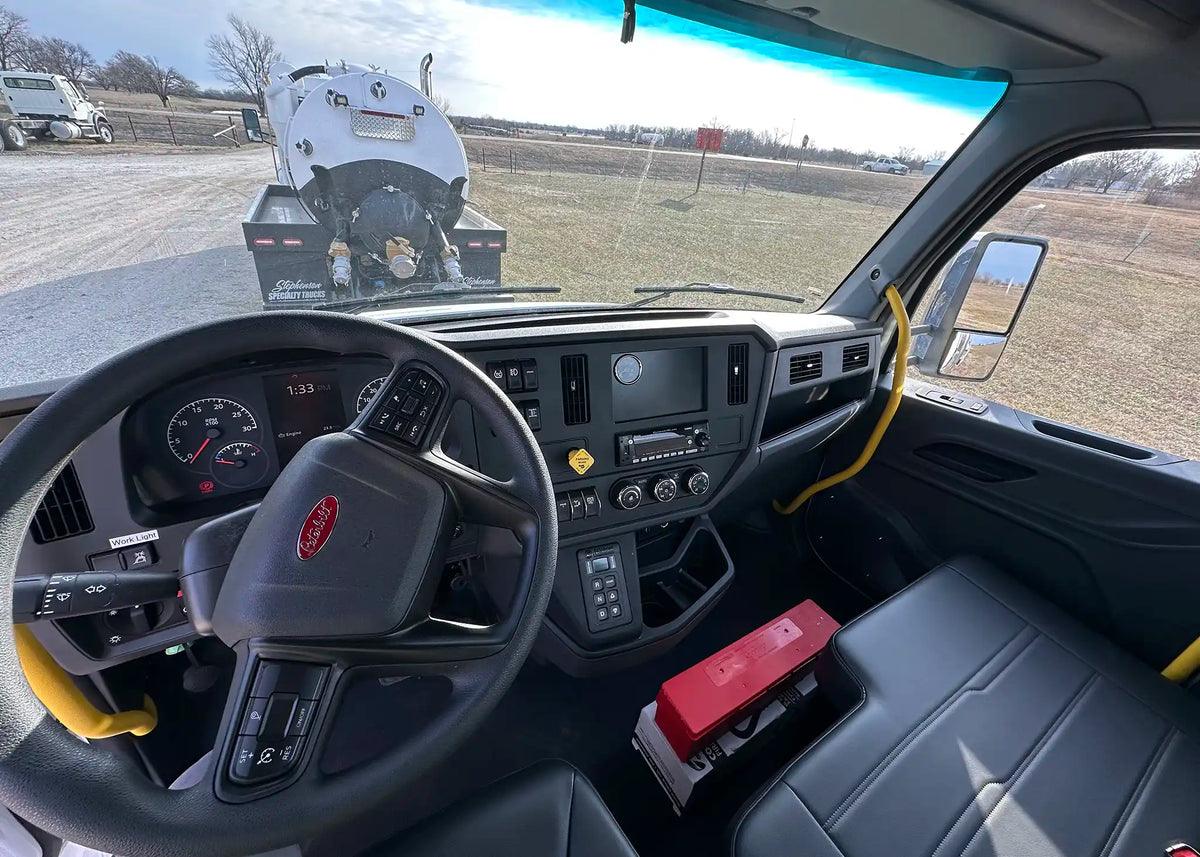
Commercial truck interiors take a beating. Drivers spend long hours behind the wheel of thier rigs often working in environments where dragging mud, dust, grease, moisture, and debris into the cab are unavoidable.
A consistent interior maintenance routine will help protect the cab's interior, improve your crew's comfort, preserve the vehicle's value, and create a safer working environment.
Whether you manage a single work truck or an entire vocational fleet of vacuum trucks, roll off trucks, hook lift trucks, grapple trucks, porta potty service trucks, or any of the other vocational trucks we sell here at Arkson Truck Co. — these commercial truck interior maintenance tips can help you keep your vehicles tidy and work-ready.
Why Commercial Truck Interior Maintenance Matters
A clean truck interior isn't just about customer appearances. Dirt, food debris, moisture, and accumulated grime can contribute to unpleasant odors, damaged surfaces, reduced visibility, and premature wear.
For fleet operators, regularly cleaning trucks should be part of a broader preventative maintenance program. Keeping interiors clean also makes it easier for drivers and technicians to identify problems such as damaged seats, broken controls, leaking windows, worn flooring, or other malfunctioning equipment.
A well-maintained cab can also improve the driver's daily experience. Commercial drivers spend significant time inside their vehicles, making cleanliness, organization, visibility, and comfort important considerations.
Start With a Regular Cleaning Schedule
One of the simplest ways to maintain a commercial truck interior is to establish a consistent cleaning schedule.
For trucks operating in especially dirty environments, a quick daily cleanup can prevent dirt and debris from becoming embedded in flooring and upholstery. A more thorough interior cleaning should be performed weekly or as needed based on the truck's application.
A basic routine should include:
- Removing trash and loose debris
- Vacuuming floors, seats, and floor mats
- Cleaning the dashboard and controls
- Wiping door panels and high-touch surfaces
- Cleaning interior glass
- Inspecting and cleaning storage compartments
- Removing mud, grease, and jobsite residue
The frequency should reflect the truck's use-case. A grapple truck operating around construction debris or after-storm cleanup may require considerably more interior cleaning than a primarily highway-oriented service vehicle.
Keep Floors and Floor Mats Clean
Commercial truck floors are often the first area to show signs of heavy use. Mud, gravel, sand, oil, and moisture quickly accumulate around the driver's feet.
 Use durable, commercial-grade floor mats designed for the specific truck whenever possible. Remove the mats regularly and clean underneath them to prevent moisture-trapping and debris from accumulating on the cab floor.
Wet carpets should not be ignored. Persistent moisture can contribute to odors, staining, corrosion, and mold growth. If you notice an ongoing issue, identify the source of water intrusion and correct it before replacing or deep-cleaning affected materials.
Protect Seats and Upholstery
Seats experience constant contact friction and accumulate sweat, dirt, food particles, and grease under normal working conditions. Regularly vacuum upholstery and use cleaning products appropriate for the specific seat material.
For vinyl or synthetic surfaces, wipe away spills and grime before they stain or become difficult to remove. Fabric seats may require periodic deeper cleaning.
Avoid using harsh chemicals that can damage upholstery, plastics, stitching, or protective coatings; 303 & Chemical Brothers both make a variety of high-quality application-specific interior cleaners and protectants. Always follow the manufacturer's recommendations for whatever cleaning products you choose.
Clean the Dashboard and Controls Carefully
The dashboard contains some of the most frequently touched surfaces in a commercial truck. Dust and grime can accumulate around switches, displays, vents, steering wheels, and control panels.
 Use a microfiber cloth and an appropriate interior cleaner rather than soaking electronic controls. Excess moisture around switches, screens, gauges, and other electrical components can create unnecessary problems.
Pay particular attention to the steering wheel, door handles, shift controls, armrests, and other high-touch areas.
Maintain Interior Glass and Mirrors
Clean glass isn't simply a cosmetic issue, it directly affects the driver's visibility.
Windshield interiors can develop a film from dust, smoke, overspray from other cleaning products, and airborne contaminants. This film can become particularly noticeable when direct sunlight hits the glass or when driving at night.
Clean the inside and outside of windows regularly using an automotive glass cleaner and a lint-free microfiber towel. Keep mirrors clean as well, particularly on vocational trucks where maintaining a high degree of visibility around the vehicle is critical.
If windshield wipers leave streaks or fail to remove moisture effectively, replace the worn blades.
Control Odors at the Source
Air fresheners can temporarily mask unpleasant odors, but they don't solve the underlying problem.
If a commercial truck develops an odor, inspect the cab for potential sources such as:
- Wet carpets or floor mats
- Food and beverage spills
- Trash
- Dirty upholstery
- Moisture intrusion
- HVAC filters
- Accumulated debris beneath seats
Removing the source is more effective than simply covering it with an overpowering fragrance.
Keep the Cab Organized
Organization is another important part of commercial truck interior maintenance. Loose tools, paperwork, bottles, personal items, and equipment can quickly turn a presentable work truck cab into a cluttered mess.
Use designated storage compartments, organizers, bins, and mounting systems to keep essential items secure and accessible. Reducing loose objects also helps prevent items from becoming distractions or hazards while the vehicle is moving, or from becoming projectiles in an unexpectedly-sudden stop.
For vocational trucks, organization should extend beyond the cab. Service documentation, PPE, tools, and frequently used equipment should have designated storage locations throughout the vehicle.
Inspect the Interior During Routine Maintenance
Interior cleaning is an excellent chance to identify problems before they become safety issues or more extensive repairs down the line.
While cleaning the truck, inspect:
- Seat belts and buckles
- Seats and mounting hardware
- Door seals
- Windows and regulator function
- HVAC vents
- Dashboard controls
- Warning lights and displays
- Interior lighting
- Floor coverings
- Mirrors and any visibility equipment kept in-cab
If you discover damaged safety equipment, electrical problems, or malfunctioning controls, this is the time to address the issue.
Build Interior Maintenance Into Your Fleet Program
For companies operating vocational trucks, whether from Arkson Truck Co. or elsewhere, interior care should be treated as part of the overall preventative maintenance strategy for your business. A clean, organized cab is easier to inspect, more comfortable for drivers, and better positioned to withstand the demands of daily commercial use.
From habitually cleaning trucks after messier jobs to inspecting cab components during scheduled service, small maintenance tasks can make a significant difference over the life of a vehicle.
No matter what type of vocational rig your business requires, a consistent interior maintenance program helps protect your investment and keeps your fleet professional, functional, and ready for work.
Commercial Truck Interior Maintenance FAQs
How often should a truck interior be cleaned?
Truck interiors should receive a quick cleaning as needed or daily, with a more thorough cleaning at least weekly for vehicles used in demanding environments. The ideal schedule depends on the truck's application, driver usage, and exposure to dirt, mud, grease, and debris.
What is the best way to clean a commercial truck interior?
Start by removing trash and loose debris, then vacuum the seats, floors, and mats. Wipe the dashboard, controls, door panels, and high-touch surfaces with appropriate automotive interior cleaners. Finish by cleaning the interior glass and inspecting the cab for damage or moisture.
How do you clean a work truck that gets dirty every day?
For work trucks exposed to construction sites, waste, mud, or other debris, use a daily cleaning routine. Remove debris, vacuum the cab, clean high-touch surfaces, and remove contaminated floor mats. A deeper interior cleaning should be performed regularly to prevent dirt, grease, and odors from becoming embedded.
What should you use to clean truck seats?
Use a cleaner specifically designed for the seat's material. Vinyl and synthetic seats can generally be wiped with an appropriate automotive interior cleaner, while fabric upholstery may require a dedicated fabric or upholstery cleaner. Avoid harsh chemicals that can damage materials, stitching, or protective coatings.
How do you prevent odors in a truck cab?
Identify and remove the source rather than simply masking the odor. Check for wet floor mats, moisture intrusion, food spills, trash, dirty upholstery, and HVAC-related issues. Keeping the cab dry and maintaining a consistent cleaning schedule can help prevent recurring odors.
Why is keeping a truck interior clean important?
Regular interior maintenance helps protect upholstery and interior surfaces, improve driver comfort, maintain visibility, reduce odors, and identify damaged components early. For fleet operators, a clean and organized cab also contributes to a professional appearance and more effective preventative maintenance.
How do you keep a vocational truck cab organized?
Use designated storage compartments, bins, organizers, and mounting systems for tools, paperwork, PPE, and personal items. Keeping loose objects secured and organized helps reduce cab clutter and makes frequently used equipment easier to access.
What should be inspected when cleaning a truck interior?
Use cleaning as an opportunity to inspect seat belts, seats, door seals, windows, HVAC vents, dashboard controls, warning lights, interior lighting, floor coverings, and mirrors. Any damaged safety equipment or malfunctioning controls should be addressed promptly.
Share:
Vacuum Truck Pumps vs. Blowers: A Technical Comparison of Battioni, NVE, and Masport Systems
Hydraulic Fluid Servicing Tips: How to Keep Vocational Truck Hydraulics Clean, Cool & Reliable