
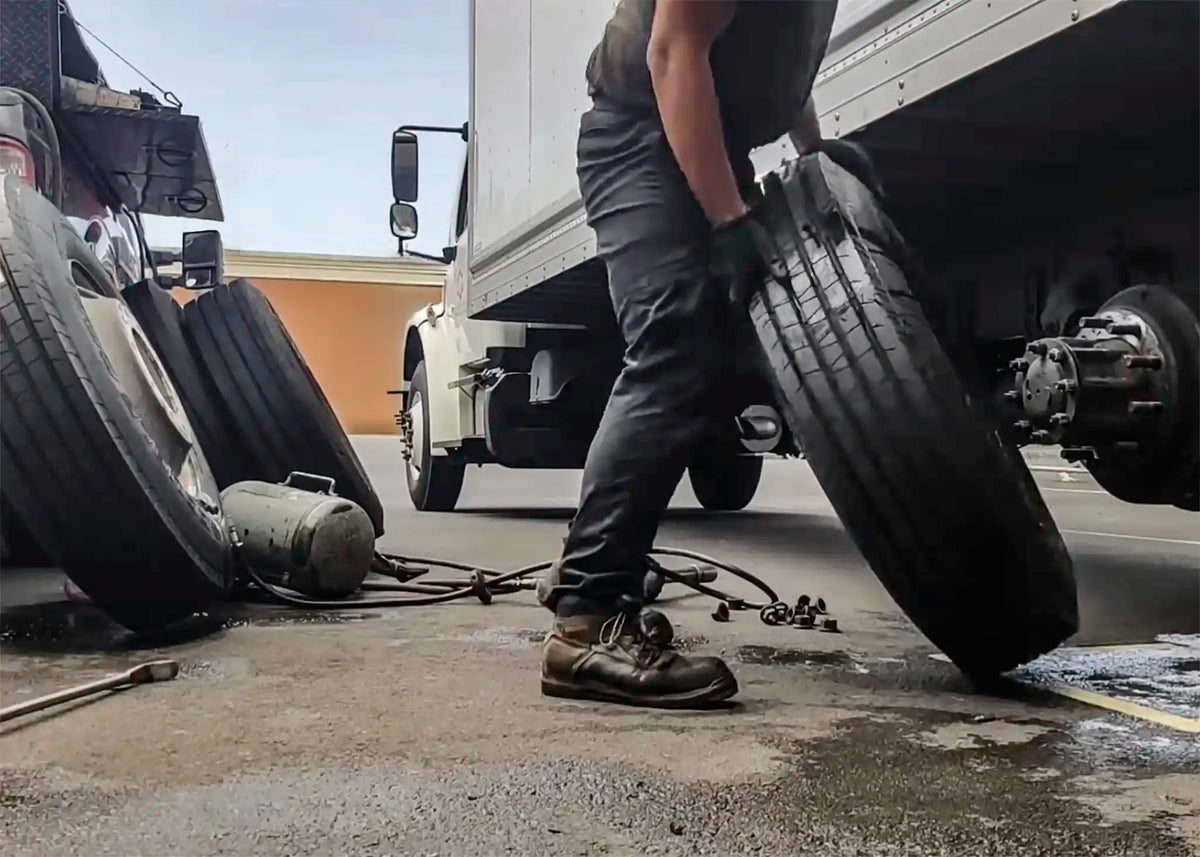
For commercial truck operators, tires are more than a wear item — they're a critical component of safety, uptime, fuel economy, and operating costs. Whether you operate vacuum trucks, roll off trucks, portable restroom trucks, hook lift trucks, grapple trucks, or other vocational rigs, proper tire maintenance can help prevent roadside failures and keep your fleet working.
A consistent commercial truck tire maintenance program should focus on tire pressure, tread depth, damage inspections, alignment, load requirements, and timely replacement. The same principles apply to semi truck tire maintenance, although vocational trucks often face additional challenges from heavy loads, frequent stops, jobsite debris, and low-speed maneuvering.
Why Commercial Truck Tire Maintenance Matters
Tires on commercial trucks operate under significant loads and in seriously demanding conditions. Underinflation, overloading, excessive heat, improper alignment, and physical damage can accelerate wear and increase the risk of tire failure.
FMCSA requires motor carriers to systematically inspect, repair, and maintain commercial motor vehicles and keep equipment in safe operating condition. Tire requirements include proper inflation, load restrictions, tread depth, and freedom from certain defects.
For fleet managers, preventative truck tire maintenance is also a cost-control strategy. Identifying a worn or damaged tire during a routine inspection is far less disruptive than dealing with a blowout, roadside service call, or unexpected vehicle downtime.
Check Commercial Truck Tire Pressure Regularly
Proper inflation is one of the most important aspects of commercial and semi truck tire maintenance. A tire that is underinflated can generate excessive heat, wear unevenly, reduce fuel efficiency, and become more susceptible to failure.
Check tire pressure when tires are cold and use the inflation pressure appropriate for the vehicle's load and tire configuration. Do not simply inflate tires to the maximum pressure molded into the sidewall.
For vocational trucks, pressure checks are especially important when operating conditions or payloads change. A vacuum truck, roll off truck, or grapple truck may experience substantial variations in operating weight, making proper tire inflation essential for safe load carrying and predictable handling.
Inspect Tread Depth and Wear

Tread condition provides important information about both tire safety and vehicle maintenance.
Commercial truck operators should be regularly looking for:
- Uneven or irregular tread wear
- Excessive shoulder wear
- Cuts, punctures, or cracking
- Bulges or other sidewall damage
- Exposed belt or body-ply material
- Tread separation
- Embedded objects
- Insufficient tread depth
Federal requirements establish minimum tread depths for commercial vehicles. Tires on the steering axle of a truck (or truck tractor) generally require at least 4/32 inch of tread in a major groove, while other tires generally require at least 2/32 inch.
However, fleet operators should not wait until a tire reaches the legal minimum before evaluating replacement. Uneven wear, casing condition, operating environment, and the tire's intended application should all factor into replacement decisions.
Pay Attention to Uneven Tire Wear
Uneven tread wear is often a symptom rather than the underlying problem. If one side of a tire is wearing significantly faster than the other, the truck may have an alignment, suspension, steering, wheel-end, or inflation issue.
 Common patterns include:
Inside or outside shoulder wear: May indicate alignment or suspension problems.
Center tread wear: Can be associated with excessive inflation.
Both shoulders wearing: May indicate underinflation.
Cupping or scalloping: Can indicate balance, suspension, or wheel-end issues.
Correcting the underlying problem is essential to resolving the ongoing tire-wear issues. Simply replacing the tire without addressing the cause will likely result in premature wear on the replacement too.
Consider the Truck's Application and Load
Not every commercial truck operates under the same conditions. Tire selection and maintenance should reflect the truck's application.
A vacuum truck may spend considerable time on construction sites, municipal routes, or unpaved surfaces. A roll off truck or hook lift truck may experience high loads and repeated loading cycles. Grapple trucks routinely encounter less-than-ideal jobsites riddled with debris and puncture hazards, while portable restroom service trucks may accumulate significant stop-and-go mileage.
These operating conditions influence tire wear, inflation requirements, traction needs, and inspection frequency.
Always verify that tires are correctly sized and rated for the truck, axle, and intended load. Tire and wheel combinations must also be compatible with the vehicle and application.
Maintain Wheel Alignment and Balance
Proper alignment can extend tire life and improve vehicle handling. If a commercial truck consistently pulls to one side, develops steering vibration, or shows abnormal tread wear, have the vehicle inspected by a qualified technician.
Wheel balancing is also important, particularly when installing new tires. Excessive vibration can affect driver comfort and contribute to the accelerated wear of the truck's tires and suspension components.
For fleets, investigating abnormal tire wear early can help prevent what would otherwise be a relatively inexpensive alignment or suspension issue fix from becoming a major maintenance expense down the road.
Create a Preventive Tire Inspection Program
The most effective commercial truck tire maintenance programs are systematic rather than reactive.
Drivers and maintenance teams should establish inspection procedures that include tire pressure, tread condition, sidewalls, wheels, and visible damage.
Your fleet program should include:
-
Pre-trip inspections for visible tire damage and obvious inflation problems.
-
Routine pressure checks using a tested-accurate gauge.
-
Regular tread-depth measurements rather than relying solely on visual inspection.
-
Scheduled tire and wheel inspections by qualified technicians.
-
Documentation of tire maintenance and replacement history.
-
Immediate investigation of abnormal wear or recurring failures.
Know When to Replace a Commercial Truck Tire
A tire should be removed from service when it has unsafe damage, insufficient tread, exposed structural material, significant separation, or any other conditions that make it unsuitable for continued operation.
Don't ignore a tire simply because "it still holds air." Structural damage, sidewall defects, irregular wear, and age can all affect tire performance.
When replacing tires, consider the truck's axle position, load requirements, operating environment, mileage, and whether the tire is intended for highway, regional, vocational, or off-road service.
Keep Your Commercial Truck Fleet Moving
Effective commercial truck tire maintenance is ultimately about protecting people, equipment, and uptime. Proper inflation, regular inspections, tread monitoring, alignment, correct tire selection, and preventative repairs can help you get more useful life from your fleets' tires while reducing the likelihood of costly roadside failures.
For operators running vacuum trucks, roll off trucks, portable restroom trucks, hook lift trucks, grapple trucks, and any other specialized commercial vehicles, tire maintenance should be part of a broader preventative maintenance strategy — not something addressed only after a problem occurs.
A well-maintained commercial truck is safer, more reliable, and better prepared to handle the demanding work it was built to do. When tire condition becomes part of your everyday fleet maintenance routine, you can identify problems earlier, minimize downtime, and keep your trucks where they belong: on the road, and on the job.
Commercial Truck Tire Maintenance FAQs
How often should commercial truck tires be inspected?
Commercial truck tires should be inspected before each trip and as part of a regular preventive maintenance program. Check tire pressure, tread depth, sidewalls, and visible damage, and investigate any unusual wear or vibration immediately.
What is the proper tire pressure for a commercial truck?
The correct tire pressure depends on the tire size, tire manufacturer's specifications, axle configuration, and the truck's actual load. Check and adjust inflation when tires are cold using the vehicle or tire manufacturer's recommended pressure.
What is the minimum tread depth for commercial truck tires?
Under federal regulations, tires on the front wheels of trucks and truck tractors generally need at least 4/32 inch of tread in a major groove. Other commercial vehicle tires generally require at least 2/32 inch. Operators should replace tires before they reach the legal minimum when condition or wear indicates replacement is necessary.
What causes uneven wear on commercial truck tires?
Uneven tire wear can result from improper inflation, wheel misalignment, worn suspension or steering components, improper balancing, overloading, or other mechanical issues. Correcting the underlying problem is important before installing replacement tires.
How does underinflation affect commercial truck tires?
Underinflation can increase heat buildup, accelerate tread and shoulder wear, reduce fuel efficiency, affect handling, and increase the risk of tire failure. Maintaining proper inflation is one of the most important parts of semi truck tire maintenance.
How often should semi truck tires be replaced?
There is no single mileage or time interval that applies to every commercial truck tire. Replacement depends on tread depth, tire damage, wear patterns, casing condition, mileage, age, load, and operating environment. Follow the tire manufacturer's recommendations and have questionable tires evaluated by a qualified professional.
Are tire inspections different for vocational trucks?
The fundamentals are the same, but vocational trucks often operate under more demanding conditions. Vacuum trucks, roll off trucks, hook lift trucks, grapple trucks, and portable restroom trucks may encounter heavy loads, construction debris, uneven terrain, and frequent stops, making regular inspections particularly important.
Why is commercial truck tire maintenance important?
Proper tire maintenance helps improve safety, maximize tire service life, reduce unexpected breakdowns, and minimize fleet downtime. For commercial fleets, preventative tire maintenance can also help identify alignment, suspension, loading, and other mechanical problems before they become more expensive repairs.
Share:
Choosing the Right Chassis for a Vacuum Truck
Vacuum Truck Pumps vs. Blowers: A Technical Comparison of Battioni, NVE, and Masport Systems