
Product Specs

Tank Material

Tank Size

CFM Range

CDL Designation
4,200 Gallon Carbon Steel Vacuum Truck | High-Capacity
Product Specs
Tank Material
Tank Size
CFM Range
CDL Designation
Pairs well with
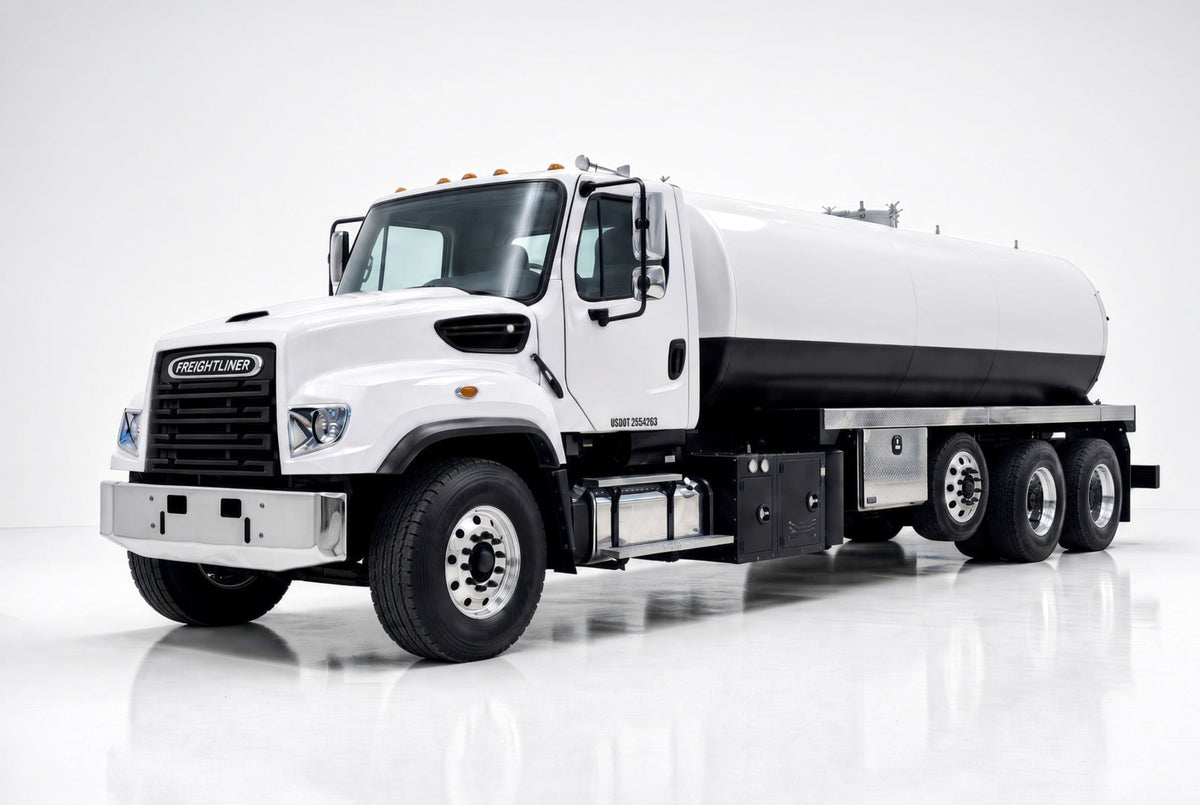
4,200 Gallon Carbon Steel Vacuum Truck
Step Up to the Big-Boy Game
Our 4,200 Gallon Carbon Steel Vacuum Truck is built for operators ready to maximize capacity and productivity. Depending on terrain and topography, a 9L 360–370 HP engine can still work in this class, but our preferred configuration is a 12–13L, 400+ HP powertrain to comfortably handle the larger loads.
At 4,200 gallons, you’re stepping into the big-boy game—with the capacity to handle multiple jobs per load, sometimes up to four aerobic systems or even more conventional septic tanks before heading to disposal.
That additional capacity means fewer trips back and forth to offload, saving time, fuel, labor, and truck miles while allowing you to complete more revenue-producing work each day.
For high-volume operators, the 4,200-gallon configuration delivers what matters most: maximum capacity, fewer disposal trips, and greater daily productivity.
4,200 Gallon Carbon Steel Vacuum Truck | High-Capacity
Arkson 4200 Gallon Steel Vacuum Truck
A 4,200-gallon carbon steel tank is for operators who want maximum usable capacity on a straight-truck chassis — more stops between dumps, fewer plant runs, and a full day’s work in the tank when the route supports it.
This is not a compact 1,900 or a mid-size 2,500. It is a high-capacity CDL vacuum truck built for septic, municipal, grease, and liquid-waste work where gallons per trip pay the note. Our standard 4,200-gallon builds do not cheap out on the tank, the cyclone, the valves, or the chassis package. Don’t buy the cheapest truck on the market. Buy the one you can count on to keep you going.
Features
- 12" Secondary Cyclone with 2" Drain Valve (Scrubber)
- Aluminum Hose Trays
- 5" Sight Eyes
- 25" Rear Manway Hatch
- 20" Top Manway Hatch
- 12" Primary
- Rear Work Lights
- Driver and Passenger Side Scene Lights
- Pump or blower package — 423 to 940 CFM
- 6" MZ Brass Lever Rear Discharge Valve
- 4" Suction Ports (1x High Rise / 1x Standard)
Why a cyclone instead of a 12-gallon secondary
A standard 12-gallon secondary is a settling pot. Air slams into a small tank, liquid drops if it has time, and whatever is still airborne goes to the pump. At real CFM the air is moving too fast for that volume to finish the job. The pot fills, foams over, and the pump eats mist, slurry, and grit.
Arkson’s secondary cyclone is a working separator, not a bucket. Air enters the top and exits the side. That path spins the stream so liquid and solids drop to the bottom while cleaned air leaves toward the pump.
Most secondaries have a 1" drain. Debris gets stuck and the valve clogs. Our cyclones use a 2" ball valve at the bottom.
Drain it daily with use. That two-minute habit is what keeps carryover off the vanes and keeps the vacuum pump or blower performing.
This matters even more on a 4,200-gallon steel truck:
- Better pump protection at working CFM. High airflow does not overwhelm a cyclone the way it floods a canned secondary. Less liquid carryover means longer vane, lobe, and seal life.
- Top-in, side-out flow path. Inlet at the top and outlet on the side give the stream room to change direction and drop liquid before it reaches the pump — something a short 12-gallon can does not do well at speed.
- Less foam and mist through the pump. Spin-out handles wet, foamy septic and industrial loads that a tank passes through.
- Fewer rebuilds. The cyclone is there to keep the Battioni, NVE, or Masport out of the waste stream. That is the difference between a five-year pump and a twenty-year pump.
Arkson specs a secondary cyclone on the 4,200 steel because the pump is the heart of the operation. Protect it like it is. Drain the 2" valve at the end of the day.
Why Metaltecnica valves exclusively
Arkson does not mix valve brands on the 4,200 steel. Discharge, isolation, and tank protection are Metaltecnica Zanolo brass lever gate valves.
- Brass lever gate valves, Italian manufacture since 1963. The valves septic and vac shops already stock and trust.
- Metaltecnica pressure relief and vacuum relief. Adjustable, durable, one valve language from tank to pump.
No mixed iron gates. No mystery reliefs. One manufacturer, serviceable parts you can actually get.
Why the Arkson 4,200 steel is different
- Secondary cyclone — air in the top, air out the side, 2" drain ball valve at the bottom. Drain daily with use.
- High Rise Standard — trust us, you want this on your truck.
- Only Metaltecnica brass lever gates — we never cheap out on junk valves. Only MZ.
- Built for uptime — we don’t do “close enough” on transmission specs or PTO packages.
- Configurable pump / blower — Battioni FAN 420, Battioni BLW 210, NVE 887, NVE 4310, Masport Cobra.
- Tank, cyclone, and valves spec’d as a system, not a pile of catalog parts.
Chassis options
- Western Star 47X
- Freightliner FLD-114
- International HV-607
- Kenworth T-480
- Kenworth T-880
- Peterbilt 548
- Peterbilt 567
Final wheelbase, CA, axle ratings, and PTO package are set to the tank, pump, and GVWR you need.
Pump / blower options
- Battioni FAN 420 Vacuum Pump — ~423 CFM workhorse vane pump
- Battioni BLW 210 Blower — ~798 CFM. Blowers cut overhead by eliminating vacuum pump oil and the daily muffler drain.
- NVE 887 Vacuum Pump — 532 CFM Challenger-class vane pump
- NVE 4310 Blower — up to ~940 CFM. Oil-less, high-volume option for fast pulls on a 4,200-gallon tank
- Masport Cobra — 532 CFM vane pump, sized for 3,000–8,000 gallon tanks
Pump choice drives PTO, relief sizing, and hose diameter. The cyclone stays in front of whatever you pick.
Built from American-made carbon steel, the tank is built for daily vacuum and pressure cycles while keeping the initial investment lower than comparable aluminum or stainless. If you don’t need the weight savings or corrosion profile of alum or SS, carbon steel is the rugged, proven way to put 4,200 gallons on the road without inflating the purchase price.
More usable capacity. Heavy-duty construction. Lower initial investment. Built to work.
CDL and licensing requirements vary by vehicle configuration, actual operating weight, towing, cargo, jurisdiction, and intended use. Purchasers and operators are responsible for verifying all applicable federal, state, and local requirements.